Publushed 11/11/2026
Time to read 4 minutes
Stripe Account Closed for High Risk? Here’s How to Keep Payments Running
Your Stripe account has been closed. Payments have stopped, payouts may be on hold, and your customers are still expecting a working checkout.
For businesses relying on subscriptions or recurring revenue, even a short interruption can become expensive.
But a Stripe account closure doesn’t necessarily mean the end of your payment processing. Depending on why your account was closed, you may be able to appeal the decision, move to another provider, or migrate saved payment methods.
Here’s what to do next.
Why Does Stripe Close High-Risk Accounts?
Stripe regularly reviews businesses for financial, compliance, and operational risks. An account that was initially approved can face restrictions later.
Common triggers include:
- High chargeback rates: Too many customer disputes can make a business riskier to process.
- Fraud concerns: Suspicious transactions or unusual payment activity can trigger additional reviews.
- Restricted business models: Certain industries require additional approval or aren’t supported.
- Unexpected processing changes: Rapid volume growth or changes in transaction patterns may raise concerns.
- Compliance issues: Missing business information, unclear billing terms, or policy violations can affect eligibility.
Importantly, being a legitimate business doesn’t automatically mean every payment processor can support you.
Stripe’s risk policies and financial partners determine which businesses it can accept.
Stripe Closed Your Account: 4 Steps to Take
1. Check the Closure Reason and Request a Review
Start with the email from Stripe and any notification in your Dashboard.
If you believe the decision was based on incorrect information, use the review or appeal process provided by Stripe.
Prepare your supporting documents:
- Business registration and relevant licenses
- Recent processing statements
- Chargeback and refund history
- Clear descriptions of your products and billing model
- Customer support, cancellation, and refund policies
An appeal isn’t guaranteed to succeed, particularly when your business falls into an unsupported category.
Don’t make the appeal your only recovery plan.
2. Protect Your Payment and Subscription Data
Before losing Dashboard access, export the information available to you, including customer records, invoices, subscription details, and transaction history.
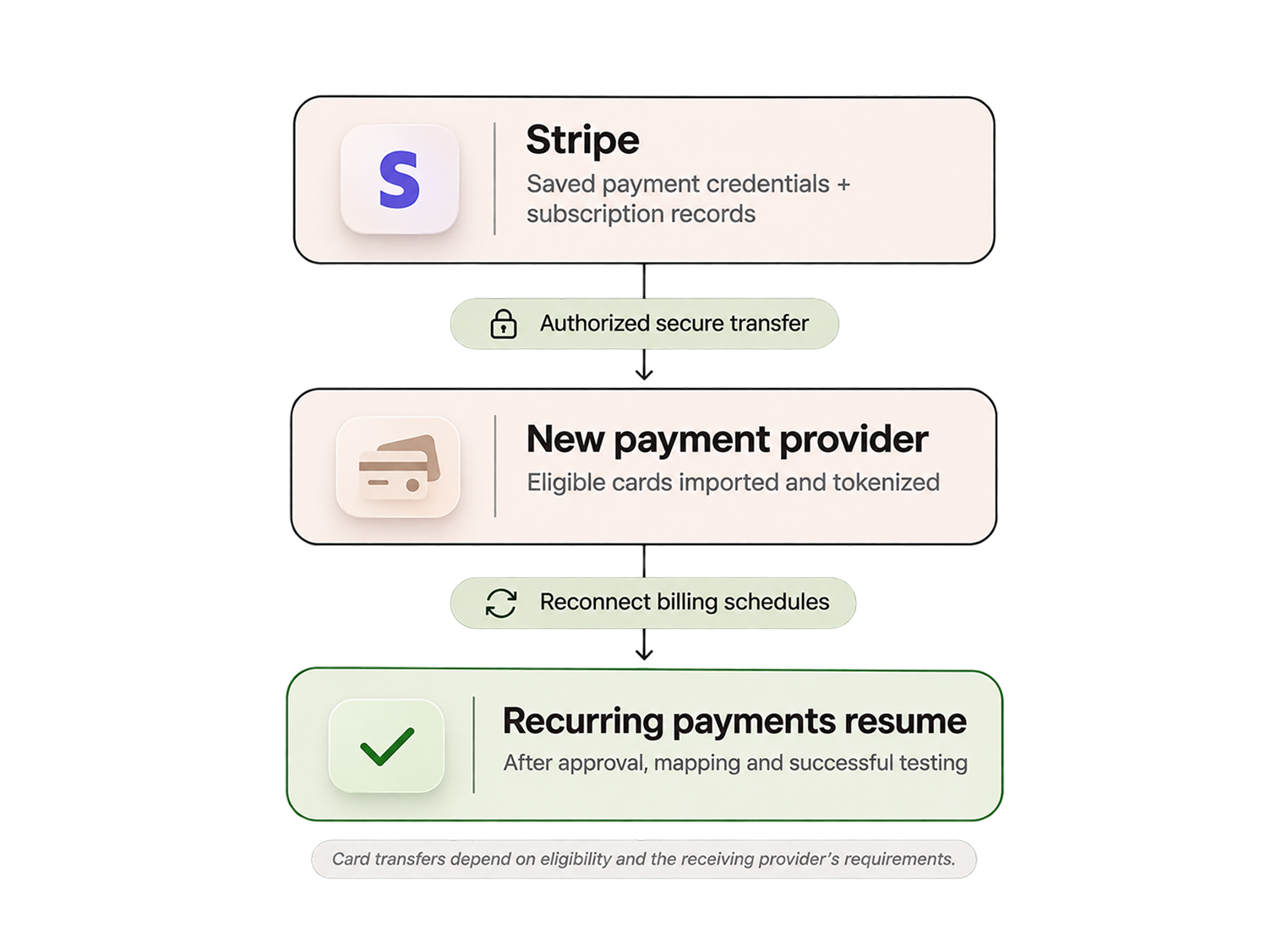
If you rely on recurring billing, your saved payment methods may be critical to recovering revenue.
Stripe supports certain card data migrations to eligible PCI-compliant providers, subject to its policies, security requirements, and the reason for account termination.
Contact Stripe’s migration team as early as possible to establish what’s transferable.
Important: Exporting subscription records and transferring saved card data are separate processes. You’ll need to plan for both.
3. Find a Payment Provider That Accepts Your Risk Profile
Moving to another general-purpose processor without addressing the underlying risk may lead to another closure.
Instead, evaluate high-risk payment processors based on:
- Your industry and operating jurisdictions
- Historical chargeback and fraud exposure
- Recurring billing requirements
- Supported payment methods and currencies
- Processing fees, rolling reserves, and settlement terms
A suitable acquiring partner should understand your business model before onboarding, not discover its risks after you begin processing.
Explore High-Risk Merchant Accounts4. Migrate Payments Without Creating New Problems
Once a new provider approves your business, plan the transition carefully.
If card migration is permitted, the receiving provider can securely import eligible payment credentials and create its own tokens.
For subscriptions, you’ll also need to rebuild or reconnect billing schedules, customer mappings, and payment logic.
Before switching live transactions, test:
- Successful payments and payment declines
- Recurring charges and retry rules
- 3D Secure authentication
- Refunds and dispute handling
- Billing dates to prevent duplicate charges
Some customers may still need to update their payment details.
See How Stripe Migration Works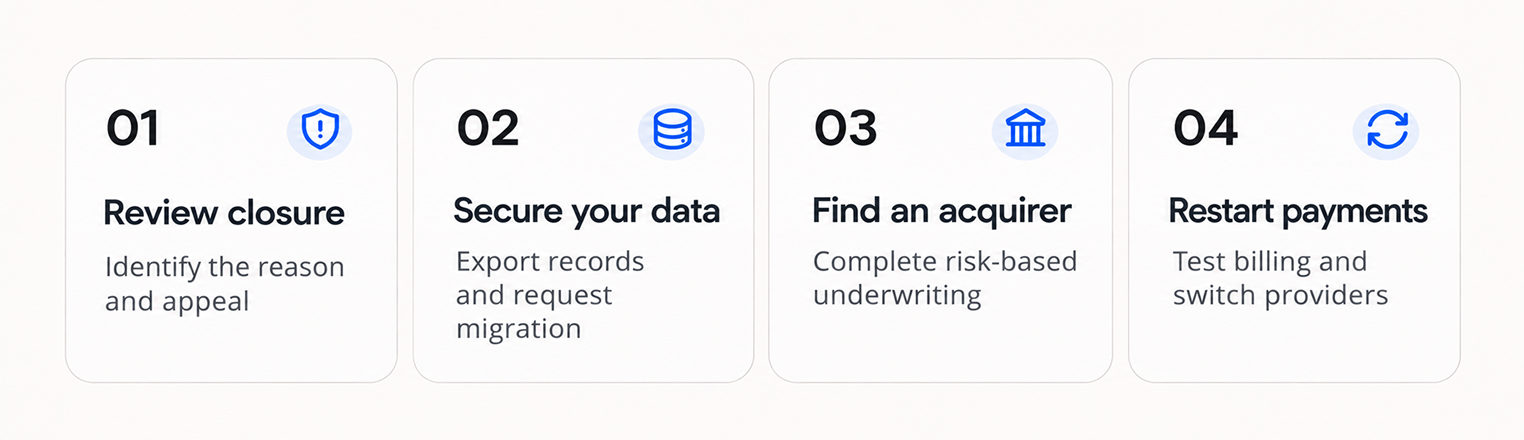
What Happens to Your Funds After Stripe Closes Your Account?
A Stripe closure and a payout hold are separate issues.
Stripe may retain funds to cover potential refunds, disputes, and other liabilities. The applicable reserve conditions depend on your account and Stripe’s assessment.
Check your Dashboard or contact Stripe Support for the relevant payout and reserve information.
Moving to a new processor does not automatically release money held by Stripe.
How to Reduce the Risk of Another Shutdown
Restoring payments is only the first step. Keeping them running matters just as much.
Monitor chargebacks and fraud trends, make subscription terms transparent, and ensure customers can easily recognize charges on their statements.
As your business grows, consider whether a multi-provider setup could reduce your dependence on a single processor.
The goal isn’t simply to replace Stripe. It’s to build a payment infrastructure that supports your business model and gives you more control over risk.
Stripe Account Closed?
Explore Your Next Payment Setup
Payments Lab helps you find a new acquiring partner and plan the transfer of eligible saved cards and recurring payments.
Share this post