Publushed 05/03/2025
Time to read 5 minutes
Visa Chargeback Monitoring Program (VCMP) Explained for Merchants
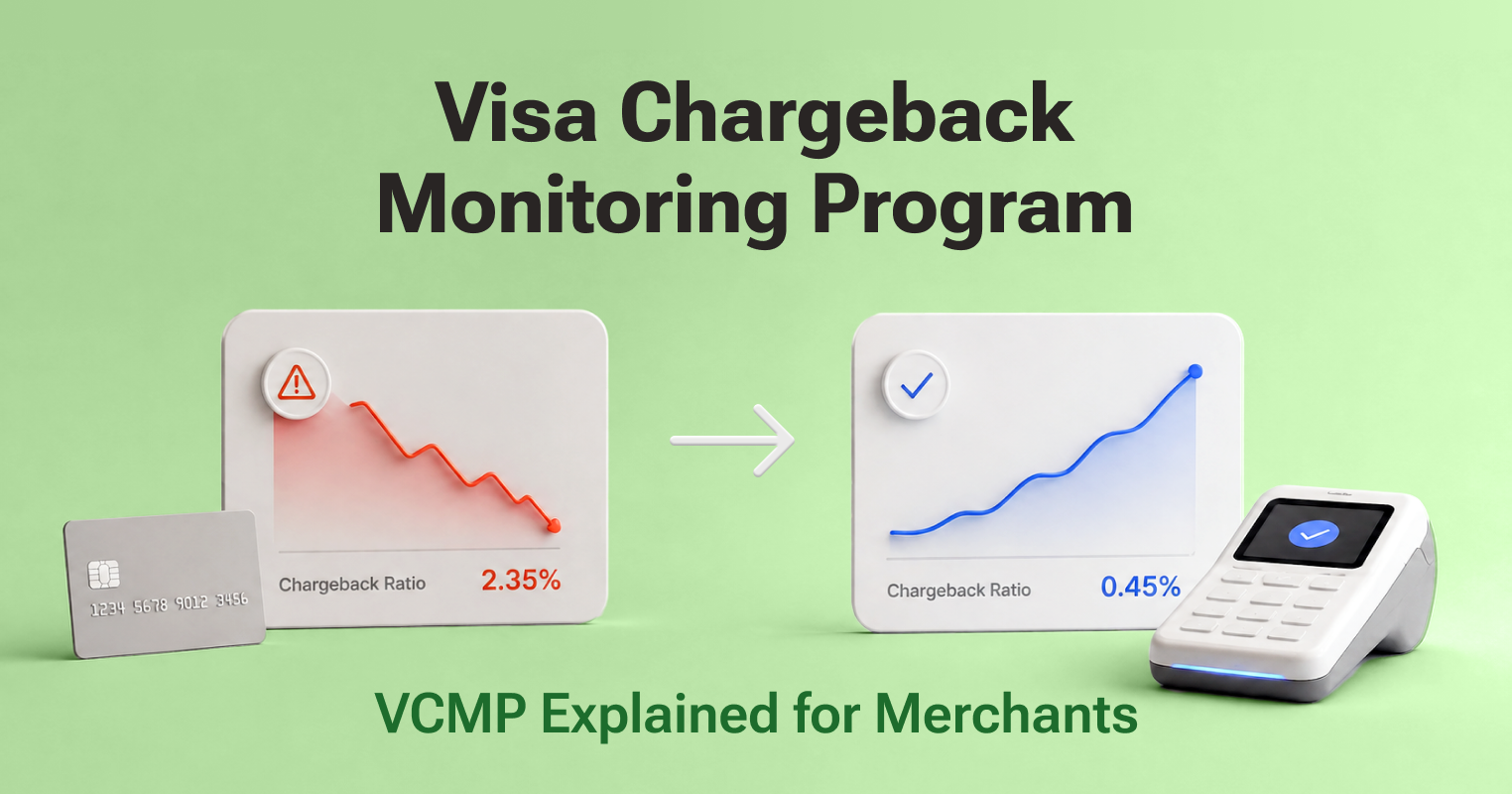
The Visa Chargeback Monitoring Program (VCMP) is Visa's way of flagging merchants with too many chargebacks. If your dispute levels rise too high, your business can face added fees, tighter oversight, and pressure to fix the problem fast.
That matters because chargebacks don't only eat revenue. They can strain your processor relationship and put card acceptance at risk if the issue drags on. For business owners, operators, and risk teams, VCMP is less about jargon and more about staying in business.
What the Visa Chargeback Monitoring Program, VCMP, is and how it works
A chargeback happens when a cardholder asks their bank to reverse a card payment. Sometimes that's tied to fraud. Other times, it comes from shipping delays, refund confusion, or a charge the customer doesn't recognize.
VCMP tracks merchants whose chargeback activity goes above Visa's allowed limits. Visa reviews this activity through the payment chain each month, but most merchants feel it through their acquirer or payment processor, not through a direct call from Visa.
The basic idea behind chargebacks and monitoring
Chargebacks exist to protect cardholders and the card network. If too many disputes come from one merchant, Visa sees that as a risk signal. The system is looking for businesses that create more losses or friction than the network wants to carry.

Chargebacks can come from true fraud, friendly fraud, billing issues, product problems, or simple confusion. A vague billing descriptor can trigger them. So can poor support or a slow refund. Monitoring programs push merchants to clean up those weak spots before the problem grows.
How merchants usually find out they are in VCMP
Most small and mid-sized merchants don't hear from Visa first. Instead, their acquirer or processor sends a notice after a monthly review cycle. That notice may include your dispute counts, your ratio, and a request for a plan.
At first, the message may sound like a warning shot. If the trend continues, the acquirer may want updates, tighter controls, or a formal remediation plan. Because the bank sits between you and Visa, staying close to that partner matters from day one.
What happens when your business enters VCMP
Entering VCMP doesn't mean your merchant account disappears overnight. Still, it's a sign that your business is under a brighter light. Your acquirer may review your traffic sources, refund practices, fraud tools, and customer support process in more detail.
The costs, restrictions, and business risks to expect
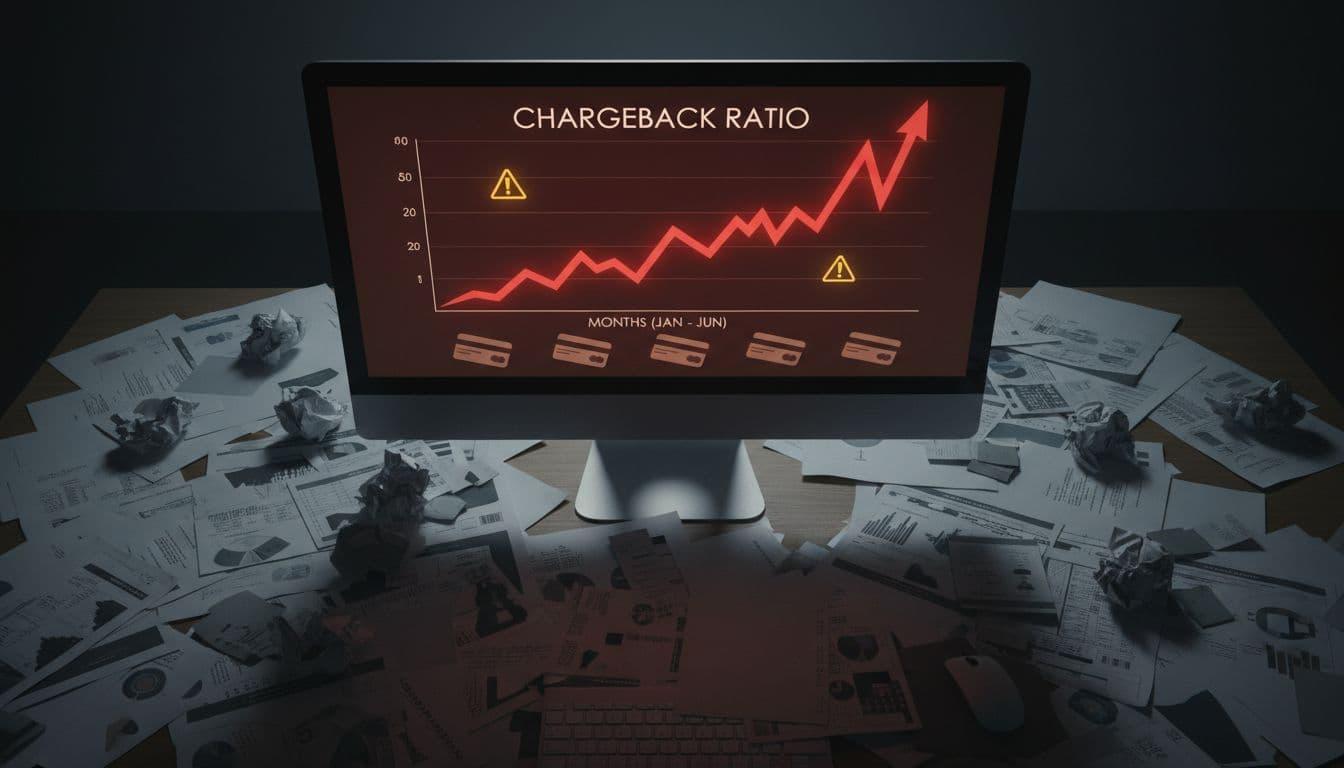
The first hit is often financial. You may see monitoring fees, higher processing costs, or both. In some cases, the acquirer may hold more funds in reserve or delay payouts while it watches your risk level.
There's also an operating cost. Your team may need to prepare reports, answer processor questions, and submit proof that changes are in progress. If results don't improve, the acquirer may decide the account is no longer worth the risk — then the biggest threat appears: losing the ability to accept Visa cards through that setup.
The real danger isn't one bad month. It's letting a bad pattern become normal.
Why chargeback ratios rise in the first place
Most merchants don't land in VCMP because of one single failure. Usually, several small issues pile up. A confusing trial offer, late shipping, weak fraud screening, and slow customer support can all push disputes higher.
Friendly fraud also plays a big role. A customer may get the product, then claim the charge was unauthorized or say the item never arrived. Unclear subscription terms often create trouble too. If billing repeats and the customer didn't expect it, the bank dispute may come before a support ticket.
How to lower chargebacks and get out of the Visa Chargeback Monitoring Program
The way out starts with facts, not guesses. Pull your reason codes, sort disputes by product and sales channel, and look for patterns. Then fix the largest source first. If 40 percent of disputes come from one offer or one campaign, start there.

Start with the biggest sources of disputes
First, separate fraud disputes from non-fraud disputes. Those two buckets need different fixes. Fraud may point to weak screening, risky traffic, or stolen cards. Non-fraud often points to service, shipping, billing, or product fit.
Next, review trends by SKU, campaign, country, device, and payment method. A single affiliate source or subscription flow can distort your whole ratio. Once you know the pattern, the work gets easier.
Build a simple chargeback reduction plan that works
Keep the plan practical. Start with your billing descriptor. If customers can't match the charge to your brand, they'll call the bank. Then tighten your product pages so delivery times, refund terms, and recurring charges are easy to spot.
- Make support easy to reach — fast replies can stop a bank dispute before it starts.
- Send tracking fast and remind customers before subscription renewals.
- Process refunds without friction when you should.
- For fraud-heavy orders, add stronger screening and review rules.
- For valid disputes, use alerts or representment when it makes sense.
Most of all, track your results every month. VCMP isn't solved with one patch. It improves when your business stops creating the same dispute again and again.
VCMP is serious, but it's manageable when you act early. The fastest path forward is to find the root cause, work closely with your acquirer, and fix the customer or fraud issues behind the numbers. If your chargeback ratio is rising, don't wait for another monthly review — chargeback control is usually built through small fixes that hold over time.
Share this post
Recommended articles
© 2026 Payments Lab Ltd. All rights reserved.
© 2026 Payments Lab Ltd. All rights reserved.