Publushed 25/10/2024
Time to read 6 minutes
Merchant Category Code Explained
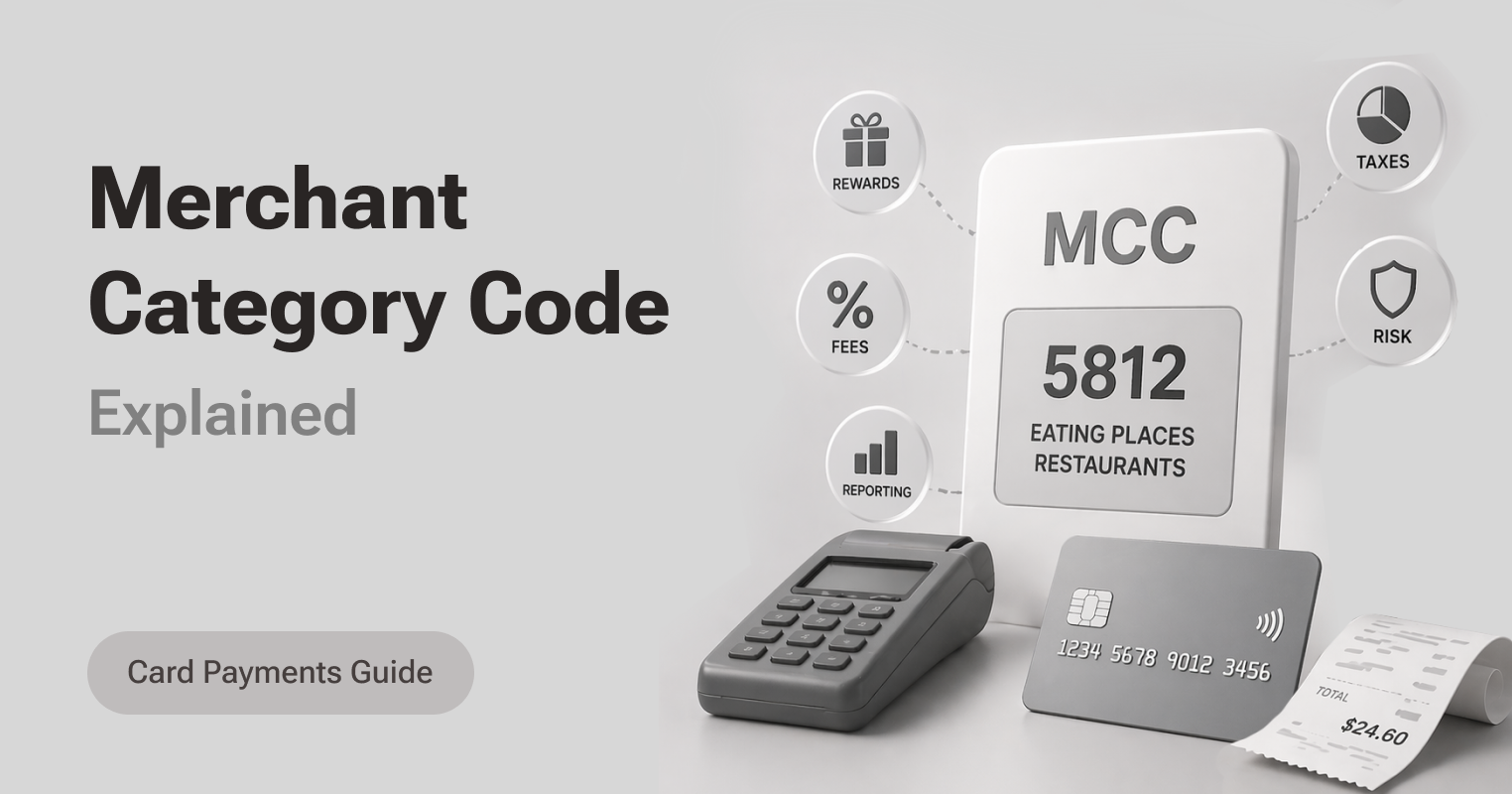
You buy coffee at a grocery store and get bonus points. The next day, you buy coffee at a corner shop and get nothing extra. Same drink, same card, different result. Often, the reason is the merchant category code, or MCC.
An MCC is a four-digit number that tells card networks what kind of business accepted the payment. That small code can affect rewards, processing fees, taxes, expense tracking, and even chargeback risk. Once you know how it works, a lot of card billing quirks make more sense.
What a merchant category code is and how it works
A merchant category code is a label for a business type. Card networks such as Visa, Mastercard, American Express, and Discover use it to classify merchants. Banks and payment processors rely on it too.
The code reflects the merchant's main line of business. A restaurant, airline, grocery store, and gas station each have different MCCs. That helps payment systems sort transactions fast and apply the right rules.
It also helps to know what MCC is not. It isn't the same as a SIC code or a NAICS code. Those are broader business classification systems used for other reporting purposes. An MCC is built specifically for card payments.
Who assigns the MCC and when a business gets one
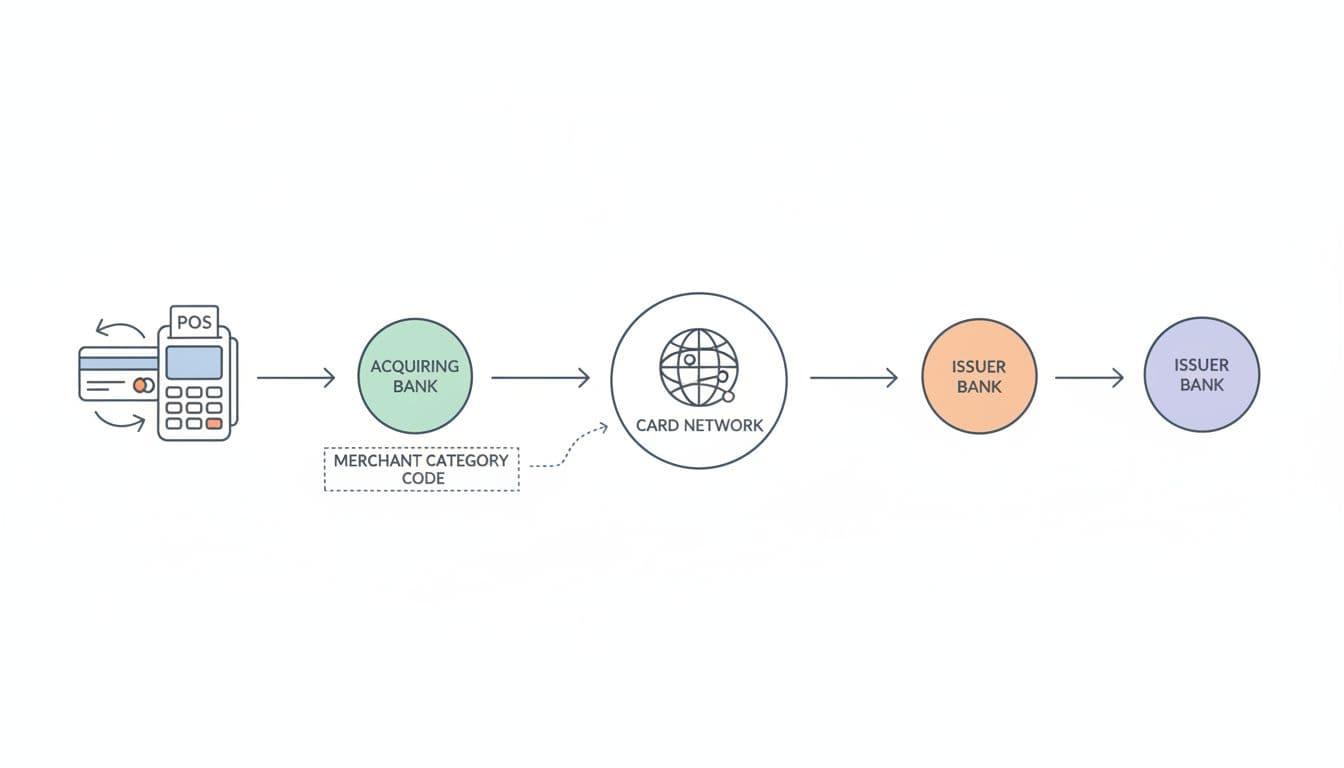
In most cases, the acquiring bank or payment processor assigns the MCC when a business opens its merchant account. They look at the business model, what the company mainly sells, and card network rules.
A business may sell several things at once. A hotel gift shop, for example, may sell snacks, souvenirs, and travel items — but it usually gets one main code. If that code doesn't match the business well, problems can follow. Rewards might not post as expected, and fees may not line up with the merchant's actual risk or sales pattern.
Why the same purchase can be treated differently
Card issuers don't judge a purchase by what you bought alone — they judge it by the merchant's MCC. That's why the same kind of item can trigger different outcomes.
A sandwich from a supermarket may code as grocery. The same sandwich from a convenience store might not. A flight booked on an airline site may count as travel, while a similar booking through another seller could post under a different category. Your card rewards follow the merchant's code, not your shopping logic.
That gap explains many point disputes. From the card system's view, the merchant type matters as much as the product.

How merchant category codes affect rewards, fees, and taxes
Why credit card rewards often depend on the MCC
Many bonus categories — dining, travel, gas, grocery, office supplies — rely on the MCC. That's why a purchase may not earn the points you expected. You may think you paid for travel, but your card may see an online booking service in a different category. Or you may buy snacks inside a gas station, yet the merchant still codes as fuel.
The reward category follows the business classification. This can feel unfair, especially when card marketing sounds broad. If points are missing, the MCC is one of the first things to check.
How MCCs can change processing fees and business reporting
For merchants, MCCs can shape interchange and processing costs. Some categories carry different pricing because they are seen as higher risk or have special network rules. Travel, subscriptions, and certain service businesses may face extra scrutiny.
MCCs also help with business reporting. Finance teams use them to group spending into categories like meals, travel, fuel, or office purchases — making expense review faster and supporting policy checks on corporate cards. Tax and reporting workflows can connect to MCC data as well, although the code alone doesn't decide every tax outcome.
Common MCC problems and what to do if a code seems wrong
Signs a merchant category code may be causing trouble
- You miss bonus points on purchases that usually earn extra rewards.
- A corporate card declines a payment because spending rules block that merchant category.
- Processing costs seem too high for your type of business.
- Reports group your business into a category that doesn't fit what you mainly sell.
These signs don't prove the code is wrong, but they give you a strong reason to look closer.

How to check, question, or correct an MCC
If you're a cardholder, start with the transaction details in your online account. Then contact the card issuer and ask how the purchase was categorized. In some cases, the issuer may explain why rewards posted the way they did.
If you run a business, contact your payment processor or acquiring bank. Explain your main activity clearly. Share documents that support it — your website, invoices, product mix, or business description. A reclassification may be possible, but it isn't automatic. Card network rules still apply, and approval isn't guaranteed.
A merchant category code may look like a small back-end detail, but it quietly shapes how card payments are treated. It can change rewards, influence fees, guide expense controls, and affect how transactions get sorted in reports. If you want better card rewards, cleaner spend data, or fewer payment surprises — pay attention to the MCC behind the charge.
Share this post
Recommended articles
© 2026 Payments Lab Ltd. All rights reserved.
© 2026 Payments Lab Ltd. All rights reserved.