Publushed 25/12/2024
Time to read 8 minutes
State of Fraud in Payments: A 2026 Report
Fraud in payments keeps rising in 2026, even though detection tools are better than they were a few years ago. The reason is that criminals adapt fast, and money now moves across more channels with less time to stop bad activity.
If you work in payments, risk, ecommerce, or fintech, you can't look at fraud as a card issue alone anymore. Payments fraud is expanding in cards, bank transfers, digital wallets, and real-time rails, often during the same customer journey.
Where payments fraud is growing fastest in 2026
The biggest change this year isn't only higher fraud volume. It's the spread of fraud into payment types that are faster, more digital, and harder to reverse once money leaves. Card-not-present fraud still hurts online sellers. At the same time, account takeover, first-party misuse, authorized push payment scams, synthetic identity fraud, and merchant abuse are taking a larger share of losses. Fraudsters go where controls are weak and recovery is slow.
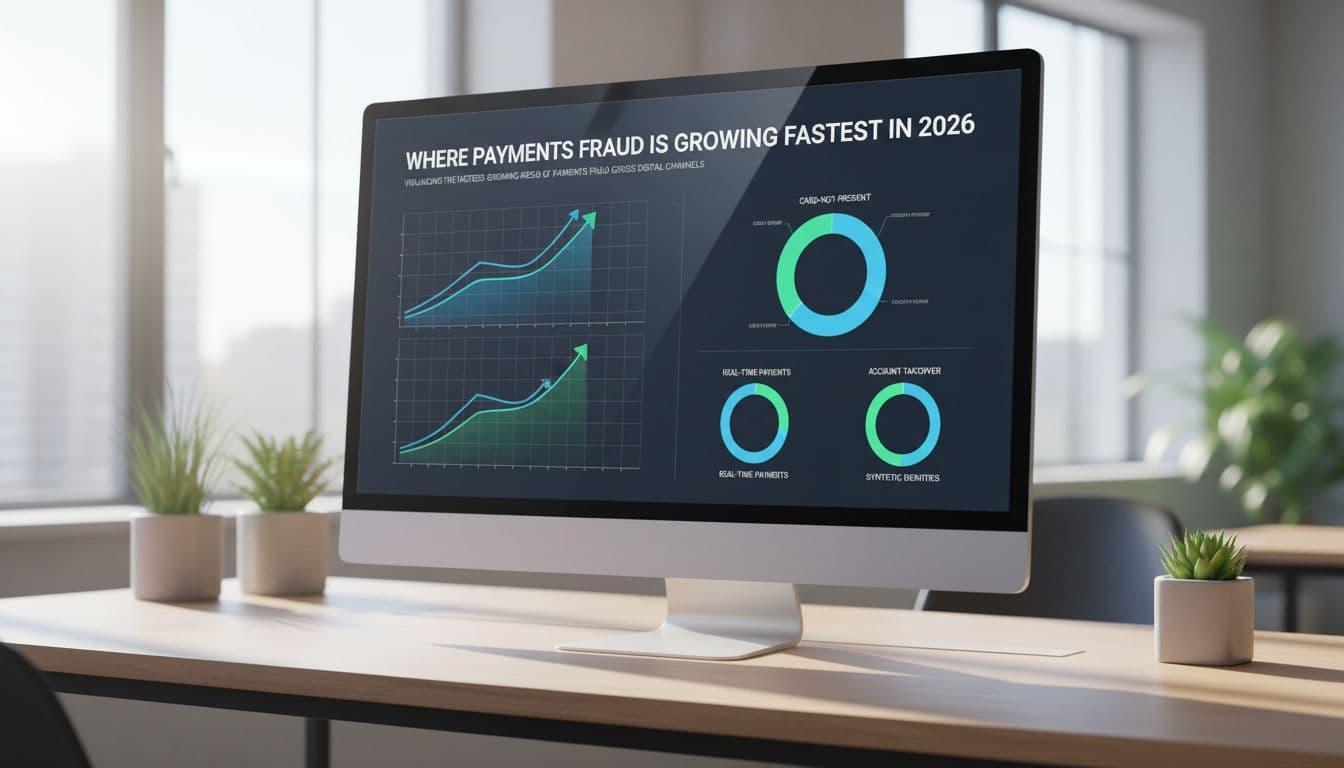
Online card fraud is still a major problem, but scams are spreading to bank payments too
Ecommerce remains a prime target because stolen card data is easy to test and use online. A criminal doesn't need a physical card when a checkout form accepts the number, date, and code. So, merchants still face bot attacks, card testing, and stolen credential abuse at scale.
However, faster bank payments create a different risk. Once a real-time transfer clears, recovery gets much harder. That makes authorized push payment scams more dangerous. A victim may send the money willingly after a fake invoice, romance scam, or spoofed support call. The payment looks valid at the point of transfer, even though the story behind it is false.
As a result, fraud is moving toward rails where speed works in the scammer's favor.
Account takeover and first-party fraud are hitting merchants from two sides
Account takeover starts with an outside attacker. They steal credentials, break into a customer account, then place orders, cash out rewards, or change payout details. Because the account is real, the activity can look normal at first glance.
First-party fraud is tougher in another way. The customer may be real, the shipment may arrive, and the payment may clear, yet the buyer still files a false dispute, abuses a refund, or exploits a promo. Some merchants also deal with return fraud and policy abuse that never looks like classic cybercrime.
That split matters because detection gets harder when one threat comes from outsiders and the other comes from your own customer base.

Why fraud teams are under more pressure than ever
Fraud teams now work in a tighter window. Customers want fast checkout, low friction, and instant payment updates. Meanwhile, attacks scale faster, cross channels, and often look more believable than they did before.
Losses still matter, but fraud prevention is also tied to approvals, trust, and customer experience. A blocked criminal is good. A blocked loyal customer is expensive. False declines cut revenue, increase support costs, and send people to a competitor in seconds.
In 2026, the hard part isn't only spotting fraud. It's spotting fraud fast enough without pushing good customers away.
Scammers are using AI to write better phishing messages, create fake identities, and test stolen data faster
AI gives scammers speed and polish. Phishing messages are cleaner, more personal, and easier to send in huge batches. Fake identities can be built with more believable details, which helps with synthetic identity fraud and weak onboarding flows.
Deepfake voice and image tricks add another layer, especially in support and account recovery. A scammer no longer needs a perfect script if software can help them sound convincing. In payments, that often leads to stronger social engineering, more account takeovers, and more successful scam payouts.
AI also helps criminals test stolen data faster. They can probe for weak merchants, retry across sites, and adjust attack patterns with less manual work. That doesn't make every fraud ring advanced, but it does raise the baseline.
Fast checkout and instant payments leave less time to spot risky behavior
The pressure for low-friction payments is real. Fewer steps often mean higher conversion. Yet fewer checks can also mean more fraud, especially when risk models rely on old static rules.
Rules still have a place, but they miss too much on their own. New attacks shift too quickly. Good customers also behave in messy ways — such as shopping on a new device while traveling — which can look suspicious if the system lacks context. Fraud checks now need to work in real time, assessing identity, device, behavior, and transaction risk at once.
What a strong 2026 fraud strategy looks like
A strong fraud strategy in 2026 is balanced, not rigid. It lowers losses, but it also protects approvals and keeps the buying experience usable. The best programs accept that fraud won't come from one channel and won't be stopped by one tool.
That means teams need better signal sharing across checkout, login, onboarding, payouts, support, and disputes. If each team sees only one slice of risk, attackers keep finding the seams.
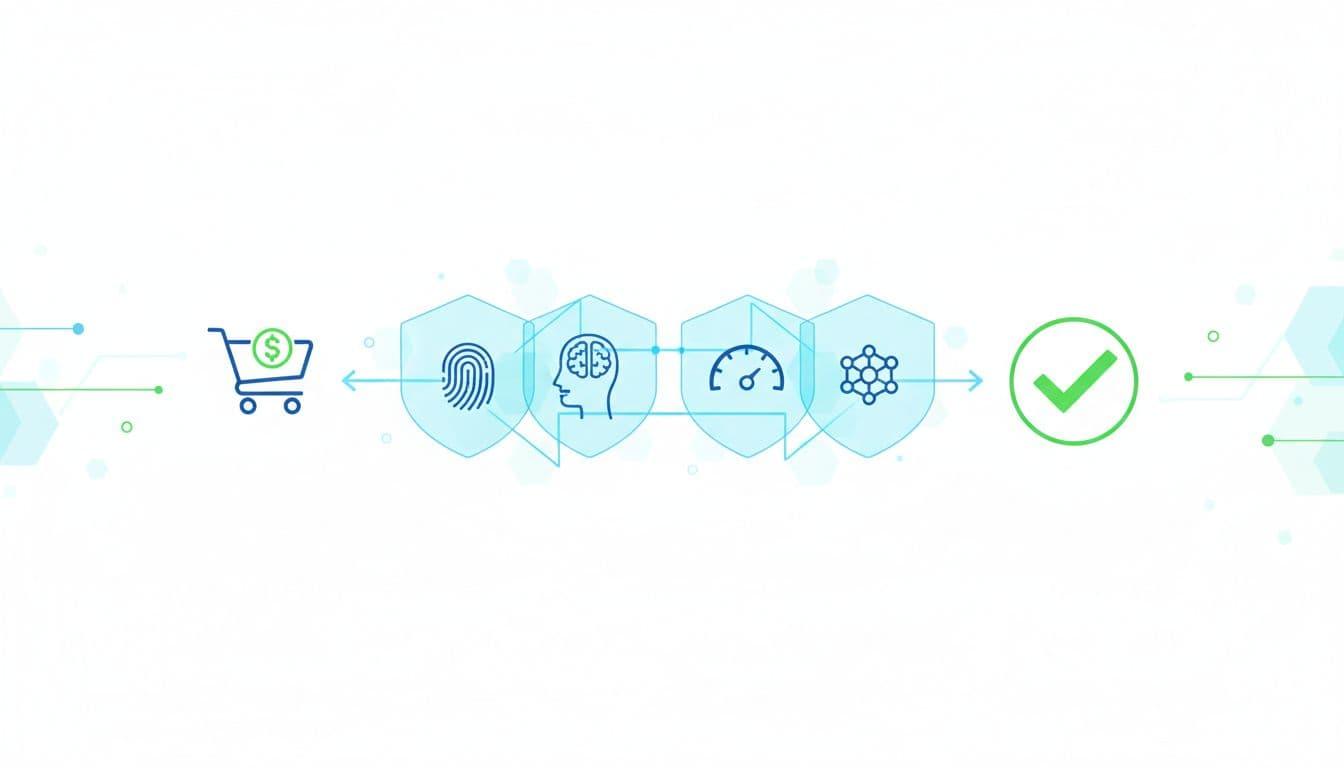
Use layered controls instead of trusting one tool to catch everything
No single model catches every fraud type. Strong programs stack controls, then tune them often. Device signals help spot suspicious hardware and repeat abuse. Behavioral analytics can flag unusual typing, session flow, or navigation patterns. Risk-based authentication adds checks only when the risk is higher.
Identity checks matter at signup and at key account changes. Transaction monitoring matters at payment and payout. Post-transaction review still matters because some abuse only appears after the order ships or the dispute arrives. Layered defense works because each control covers a different blind spot.
Measure success by losses, approvals, and customer trust together
Fraud teams need a balanced scorecard. If you only track fraud loss, you may over-block good customers. If you only chase approvals, you may invite more abuse. Track chargebacks, scam losses, false declines, manual review rates, refund abuse, and customer friction together.
Watch how often support tickets rise after a rules change. Check whether a lower loss rate came at the cost of lower conversion. The strongest teams update models and rules often, based on what the business is seeing now, not what hurt last year.
Conclusion
Payments fraud in 2026 is faster, broader, and more adaptive than many control stacks were built for. Card fraud still matters, but bank payments, account takeover, scams, and first-party abuse now demand the same level of attention.
Teams that win won't chase one perfect tool. They'll use better data, layered controls, and regular tuning across the full payment flow. That approach protects revenue, reduces avoidable friction, and keeps customer trust intact while the threat keeps changing.
Share this post
Recommended articles
© 2026 Payments Lab Ltd. All rights reserved.
© 2026 Payments Lab Ltd. All rights reserved.